
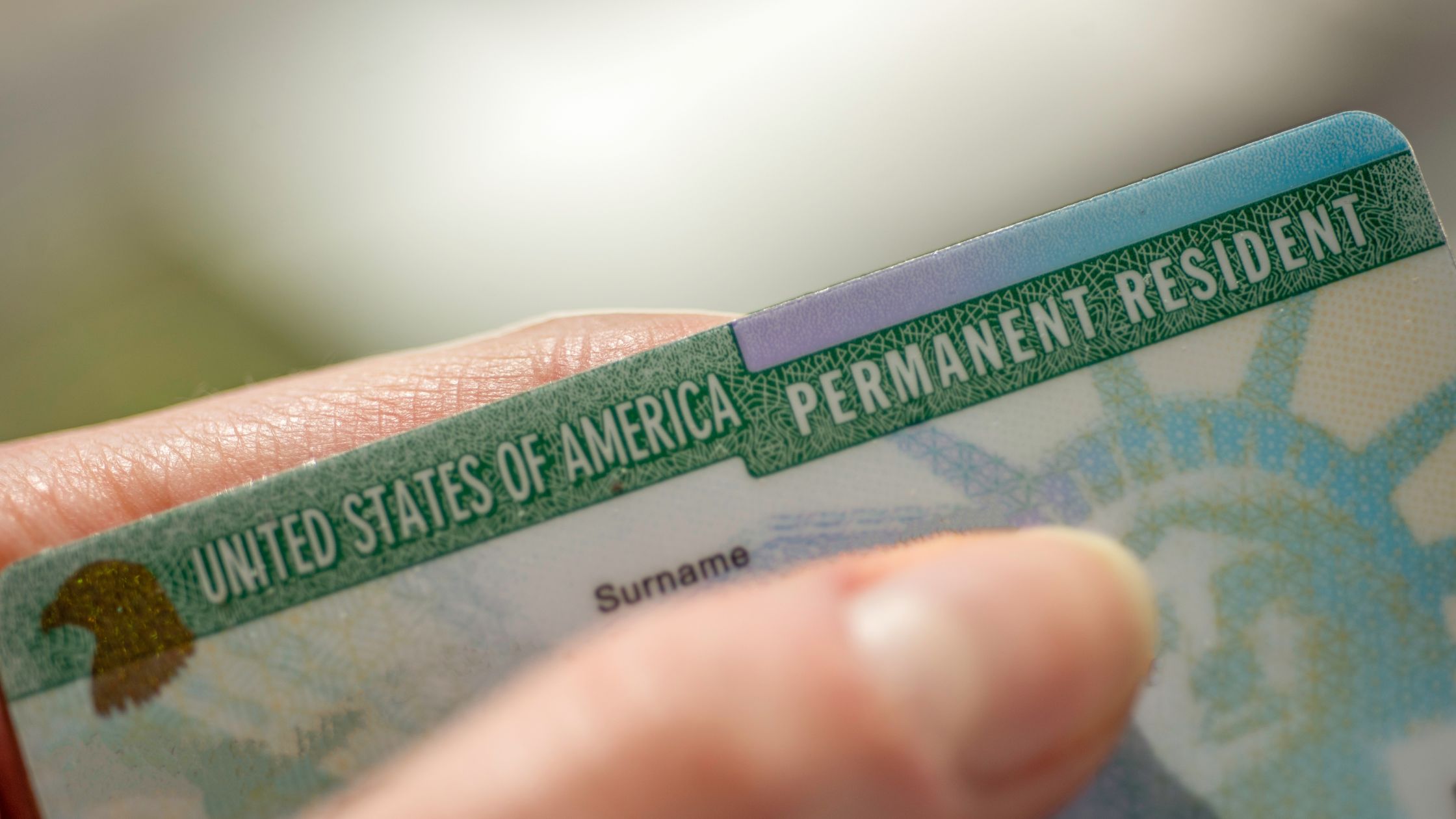
If you are on an H-1B visa and you are married to a US citizen or a green card holder, you have access to one of the most direct paths to permanent residence available in the entire US immigration system. Unlike employment-based green cards that require PERM labor certification, employer sponsorship, and in some cases decade-long priority date waits, a green card through marriage for H-1B holders cuts through much of that complexity. This guide explains exactly how the process works in 2026, the important differences between marrying a US citizen versus a permanent resident, the timeline you can realistically expect, the critical decisions around your H-1B status during the application, and the 2026-specific changes that affect every marriage-based green card applicant right now.
This is not legal advice. Please consult a licensed immigration attorney for guidance specific to your situation.
The Question I Hear Most Often
This is the question I get most often from H-1B holders who are married to US citizens or green card holders: do I still need my employer to sponsor my green card? The answer, in almost all cases, is no. And that surprises a lot of people who have spent years assuming the employment-based path is their only option. The marriage-based path is not just faster in most cases. It is also fundamentally different in structure. Your employer is not involved. Your job title does not define your eligibility. Your priority date does not depend on your country of birth. For immediate relatives of US citizens, there is no queue at all.
That is a meaningful shift in how you think about your immigration future. Let us get into exactly how it works.
Why the H-1B Is Actually an Advantage Here
Before getting into the process, it is worth understanding why being on H-1B status when you pursue a marriage-based green card is genuinely beneficial rather than a complication.
The H-1B is one of a small number of US visas that carry explicit dual intent protection. Federal law recognizes that H-1B holders can simultaneously maintain nonimmigrant status and pursue permanent residence without that intent creating any conflict with their visa status. This matters because pursuing a green card while on certain other visa types, such as a B-2 visitor visa or F-1 student visa, can raise questions about your original nonimmigrant intent and potentially complicate both your current status and your green card application. With H-1B, those concerns simply do not exist. You are legally permitted to file for adjustment of status while continuing to work under your H-1B without any inconsistency in your immigration record. (Source: USCIS.gov)
Additionally, H-1B holders have typically been in the United States for years with consistent employment records and clean immigration histories. USCIS looks at your overall immigration history when evaluating adjustment of status applications, and a well-maintained H-1B record is one of the stronger foundations you can bring to a marriage-based green card case.
A Real Situation That Shows How This Works
Take Prateek, a senior data engineer at a logistics company in Atlanta. He had been on H-1B for four years and his employer had started PERM, but as an Indian national he was looking at a multi-decade wait for an employment-based green card. He married his long-term partner, a US citizen, in early 2024. Their immigration attorney advised them to file the I-130 and I-485 concurrently as immediate relatives, along with the I-765 and I-131. His EAD arrived in about five months. His green card interview was scheduled eleven months after filing. The officer asked detailed questions about their relationship, reviewed their joint bank statements and lease, and looked through their photographs. The case was approved at the interview. From the date they filed to the date he became a permanent resident was fourteen months. His PERM case, meanwhile, had not even cleared the audit stage. The contrast was stark and the lesson was simple: for H-1B holders married to US citizens, the marriage path is almost always faster and simpler than the employment path.
Spouse of a US Citizen: The Immediate Relative Pathway
If your spouse is a US citizen, you qualify as an immediate relative under the Immigration and Nationality Act. Immediate relative status is the most favorable classification in the entire family-based immigration system. The reason is straightforward: there is no annual numerical cap on green cards issued to immediate relatives of US citizens. No waiting for a visa number. No Visa Bulletin to monitor. No priority date queue. From the moment your I-130 petition is approved and your I-485 adjustment of status application is properly filed, the only delays are processing time. (Source: USCIS.gov)
Concurrent Filing: The Key Benefit for Immediate Relatives
Because you qualify as an immediate relative and a visa number is immediately available to you, you and your spouse can file both Form I-130 (Petition for Alien Relative) and Form I-485 (Application to Register Permanent Residence or Adjust Status) at the same time. This is called concurrent filing and it significantly reduces the overall timeline because both forms begin processing simultaneously rather than sequentially.
Along with the I-130 and I-485, you should file Form I-131 for Advance Parole, which authorizes you to travel internationally while your green card is pending, and Form I-765 for an Employment Authorization Document. Filing all four forms together at the outset is standard practice and is strongly recommended by immigration attorneys.
Timeline for Spouses of US Citizens in 2026
Based on current USCIS processing data, spouses of US citizens pursuing adjustment of status inside the United States can expect the following approximate timeline in 2026. (per USCIS as of 2026)
- Receipt notices: Issued within two to four weeks of filing
- Biometrics appointment: Scheduled within one to three months
- Employment Authorization Document (EAD): Approximately 150 to 180 days from filing
- Advance Parole: Typically issued around the same time as the EAD
- Interview at USCIS field office: Typically scheduled 10 to 18 months after filing
- Total I-485 processing: 10 to 24 months from filing to green card approval, depending on the USCIS field office
Field office variation is significant. Some field offices such as those in smaller cities process cases in under 12 months. High-volume offices in New York City, Los Angeles, and Chicago routinely run 18 to 24 months or longer. You cannot choose which field office handles your case, as it is determined by your residential address when you file.
Spouse of a Green Card Holder: The F2A Category
If your spouse is a lawful permanent resident rather than a US citizen, the process works differently. Spouses of permanent residents fall under the F2A family preference category, which is subject to annual numerical limits. Unlike the immediate relative category, the F2A category does have visa caps, meaning you must wait for a visa number to become available before you can file your I-485.
You and your spouse begin by filing Form I-130 to establish your relationship. USCIS processes the I-130 and approves it, establishing your priority date. After approval, your case is transferred to the National Visa Center. You must then monitor the monthly Visa Bulletin to determine when your priority date becomes current. Only once your priority date is current can you file your I-485 for adjustment of status. (Source: State Department Visa Bulletin)
The F2A category has generally moved favorably in recent Visa Bulletins and has not experienced the severe backlogs seen in employment-based categories. As of 2026, wait times for F2A applicants after I-130 approval are running approximately one to three years before a visa number becomes available, though this can fluctuate based on monthly Visa Bulletin movement. Total timeline from initial I-130 filing to green card approval for spouses of permanent residents is typically two to four years in the current environment.
One practical note worth emphasizing: if your spouse naturalizes to US citizenship while your F2A case is pending, your classification automatically upgrades to immediate relative. At that point, concurrent filing becomes available, visa caps no longer apply, and your processing timeline typically accelerates significantly. This is a genuine strategic consideration for permanent resident spouses who are eligible and planning to naturalize.
Managing Your H-1B Status During the Green Card Process
This is where many applicants make costly mistakes. Honestly, this is the part of the marriage-based green card process that I think is most poorly understood, even by people who have done extensive research on their own. Understanding how your H-1B interacts with your pending green card application requires careful planning, particularly around work authorization and travel.
Keep Your H-1B Valid Throughout the Process
Even after you file your I-485 and your adjustment of status is pending, maintaining valid H-1B status is strongly recommended. Here is why. An approved EAD from your I-485 filing gives you separate work authorization, and you can legally work using the EAD. However, using the EAD automatically terminates your H-1B status. Once your H-1B status ends, you are relying entirely on the pending I-485 as your basis for remaining and working in the United States. If your I-485 is denied for any reason, you would no longer have any valid nonimmigrant status to fall back on.
By contrast, if you maintain your H-1B through extensions and continue working under H-1B rather than switching to the EAD, you retain a fallback status if anything goes wrong with your green card case. Most immigration attorneys advise H-1B holders to continue extending their H-1B concurrently with the pending I-485 and to work under H-1B rather than switching to the EAD, unless there is a specific reason the EAD is necessary such as changing employers.
The Conditional Green Card
If you have been married for less than two years at the time your green card is approved, USCIS issues a conditional green card valid for two years rather than the standard ten-year permanent resident card. This conditional status exists to deter immigration fraud through sham marriages. During the two-year conditional period, your rights as a permanent resident are the same as for a regular green card holder. You can work for any employer, travel freely, and live in the United States without restriction.
Within the 90-day window before the conditional card expires, you and your spouse must jointly file Form I-751 (Petition to Remove Conditions on Residence) to convert to a standard ten-year green card. The I-751 requires evidence that your marriage is genuine and ongoing, including continued joint financial records, photographs showing your life together, and potentially affidavits from people who know you as a couple. Missing the I-751 filing window causes your conditional resident status to expire, which can have serious immigration consequences including removal proceedings. Set a calendar reminder the day your conditional card arrives. Do not let this deadline sneak up on you.
Key Documents and Evidence: A Practical Checklist
Quick Tip from Experience: Start building your evidence file from the first month of your marriage, not the month before you file. USCIS officers are looking for a consistent record across time. A packet full of documents all dated within the last three months before filing looks thin compared to records that span the full history of your relationship. The couples who sail through their interviews are almost always the ones who have been documenting their life together all along without even thinking about it.
Here is what a strong marriage-based green card evidence package should include.
- ✓ Joint bank account statements spanning multiple years, showing regular transactions in both names
- ✓ Joint lease or mortgage documents with both names listed
- ✓ Utility bills, car insurance, or health insurance showing both spouses
- ✓ Federal tax returns filed jointly, if you have been married long enough to have done so
- ✓ Photographs from throughout the relationship and marriage, including ordinary everyday moments, not just formal occasions
- ✓ Evidence of travel together such as boarding passes, hotel receipts, or travel photographs
- ✓ Evidence of attendance at each other’s family events such as invitations and photographs
- ✓ Affidavit letters from friends and family who know you as a couple, describing how they have observed your relationship
- ✓ Birth certificates of any children from the marriage
- ✓ Beneficiary designations on life insurance or retirement accounts listing each other
- ✓ Any evidence of shared financial planning such as joint investment accounts or estate documents
What Changed in 2026: Enhanced Scrutiny You Need to Know About
Several developments in 2026 have changed the marriage-based green card experience compared to recent years. Understanding them helps you prepare appropriately rather than being surprised during your case.
In-Person Interviews Are Now Required Without Exception
As of 2026, USCIS requires in-person interviews for all marriage-based adjustment of status cases. The limited interview waiver provisions that previously allowed some well-documented cases to be approved without an interview have been eliminated. Both you and your US citizen or permanent resident spouse must appear together at the USCIS field office interview. The officer will ask questions about your relationship history, your daily life together, your shared finances, your living arrangement, and your future plans. They may also review your social media presence and conduct background investigations more thoroughly than in prior years.
Prepare for this interview seriously. Bring a comprehensive package of evidence of your genuine marriage. Review your application together with your spouse so your answers are consistent. The officer is not trying to trick you. They are looking for two people who clearly know each other and have genuinely built a life together. If that describes you, the interview is manageable. If you walk in underprepared with thin documentation, a straightforward interview can become a much longer process.
Expanded Public Charge Review
In 2026, USCIS has expanded its public charge evaluation for marriage-based green cards. Officers are now more closely examining factors including financial stability, employment history, and evidence that the applicant is unlikely to become dependent on government assistance. The sponsor must file Form I-864 (Affidavit of Support) demonstrating income at or above 125% of the federal poverty guidelines for the household size. For most working H-1B holders and their US citizen spouses, this requirement is easily met. However, if the sponsor’s income is near the threshold, gathering comprehensive financial documentation including tax returns, pay stubs, and bank statements is important.
Social Media Screening
USCIS officers and consular officers are now routinely reviewing publicly visible social media profiles as part of marriage-based green card adjudication. Your public social media activity may be examined for consistency with your claimed relationship and immigration history. Ensure that your relationship is reflected consistently across your public social media presence and that nothing in your public profiles contradicts what you represent in your application.
Cross-Chargeability: A Strategy That Can Eliminate Years of Waiting
For H-1B holders who are also pursuing an employment-based green card and are subject to long backlogs due to their country of birth, cross-chargeability is one of the most important strategies worth discussing with an immigration attorney. This is something I have seen trip people up repeatedly because they simply were not told it existed.
Cross-chargeability allows you to be charged to your spouse’s country of birth for visa quota purposes rather than your own. If you were born in India and face a decades-long EB-2 India backlog, but your spouse was born in Germany where no backlog exists, you can use the German quota for your employment-based case. This strategy can eliminate years of waiting for a priority date to become current. It requires that your spouse is also applying for a green card in the same petition, but it can be extraordinarily valuable for couples where the two spouses come from countries with very different backlog situations.
Questions People Actually Ask About Green Card Through Marriage
Can I work while my marriage-based green card application is pending?
Yes. If you are on a valid H-1B, you can continue working under your H-1B throughout the I-485 pending period. Alternatively, once your I-765 EAD is approved, you can work using the EAD. However, switching to the EAD terminates your H-1B status. Most immigration attorneys recommend H-1B holders continue working under H-1B rather than the EAD to preserve the H-1B as a fallback status.
Can I travel internationally while my I-485 is pending?
Yes, but only with an approved Advance Parole document. If you travel internationally while your I-485 is pending without Advance Parole, USCIS considers your adjustment of status application abandoned. H-1B holders technically may re-enter on their H-1B without Advance Parole, but this is a nuanced area and consulting your immigration attorney before any international travel during a pending I-485 is strongly recommended.
What is a conditional green card and how is it different from a regular one?
If you have been married less than two years when your green card is approved, you receive a conditional green card valid for two years. Your rights as a permanent resident are identical to a standard green card holder during that period. Within the 90-day window before the conditional card expires, you file Form I-751 jointly with your spouse to remove the conditions and receive a standard ten-year permanent resident card. Missing this filing window is a serious status violation.
How long does a marriage green card take in 2026?
For spouses of US citizens filing adjustment of status inside the US, the total timeline is currently 10 to 24 months from filing depending on the USCIS field office. For spouses of green card holders, the process takes two to four years due to the F2A visa cap and the need to wait for a current priority date before filing I-485.
Does my country of birth affect a marriage-based green card?
For spouses of US citizens applying as immediate relatives, country of birth does not create any backlog or delay because no annual visa cap applies. For spouses of permanent residents in the F2A category, country of birth also does not typically create significant delays as F2A has generally had favorable Visa Bulletin movement in 2026.
What happens if my H-1B expires before my green card is approved?
If your I-485 adjustment of status application was timely filed and remains pending when your H-1B expires, you can remain in the United States through the protections of the pending I-485. However, if you switch to the EAD and your H-1B lapses, you are relying entirely on the pending I-485 for your presence and work authorization. Work with your immigration attorney to time your H-1B extensions and I-485 filing carefully so you are never in a position where all authorizations lapse simultaneously.
Important Disclaimer
Important Disclaimer: The information on this page is for general educational purposes only and does not constitute legal advice. Immigration law changes frequently. Always verify current rules at USCIS.gov and consult a licensed immigration attorney before making any filing decisions.
The Honest Bottom Line
A green card through marriage while on H-1B is one of the cleaner and more predictable paths to permanent residence in US immigration law, particularly when your spouse is a US citizen. No PERM. No employer dependency. No per-country backlog for immediate relatives. The 2026 enforcement environment demands thorough documentation and serious interview preparation, and the interaction between your H-1B and the pending I-485 requires careful management. But for a genuine marriage between a well-documented couple, this pathway works reliably and thousands of H-1B holders navigate it successfully every year.
Start early. Document your relationship consistently from the beginning of your marriage, not the month before you file. Work with an immigration attorney who handles adjustment of status cases regularly. And if you have been assuming the employment-based path is your only option, have a real conversation with an attorney about whether the marriage path changes your timeline entirely. For a lot of people, it does.
This post was written based on firsthand experience navigating the US immigration process and years of tracking USCIS policy changes. It is reviewed for accuracy before publishing. For legal decisions, always consult a licensed immigration attorney.